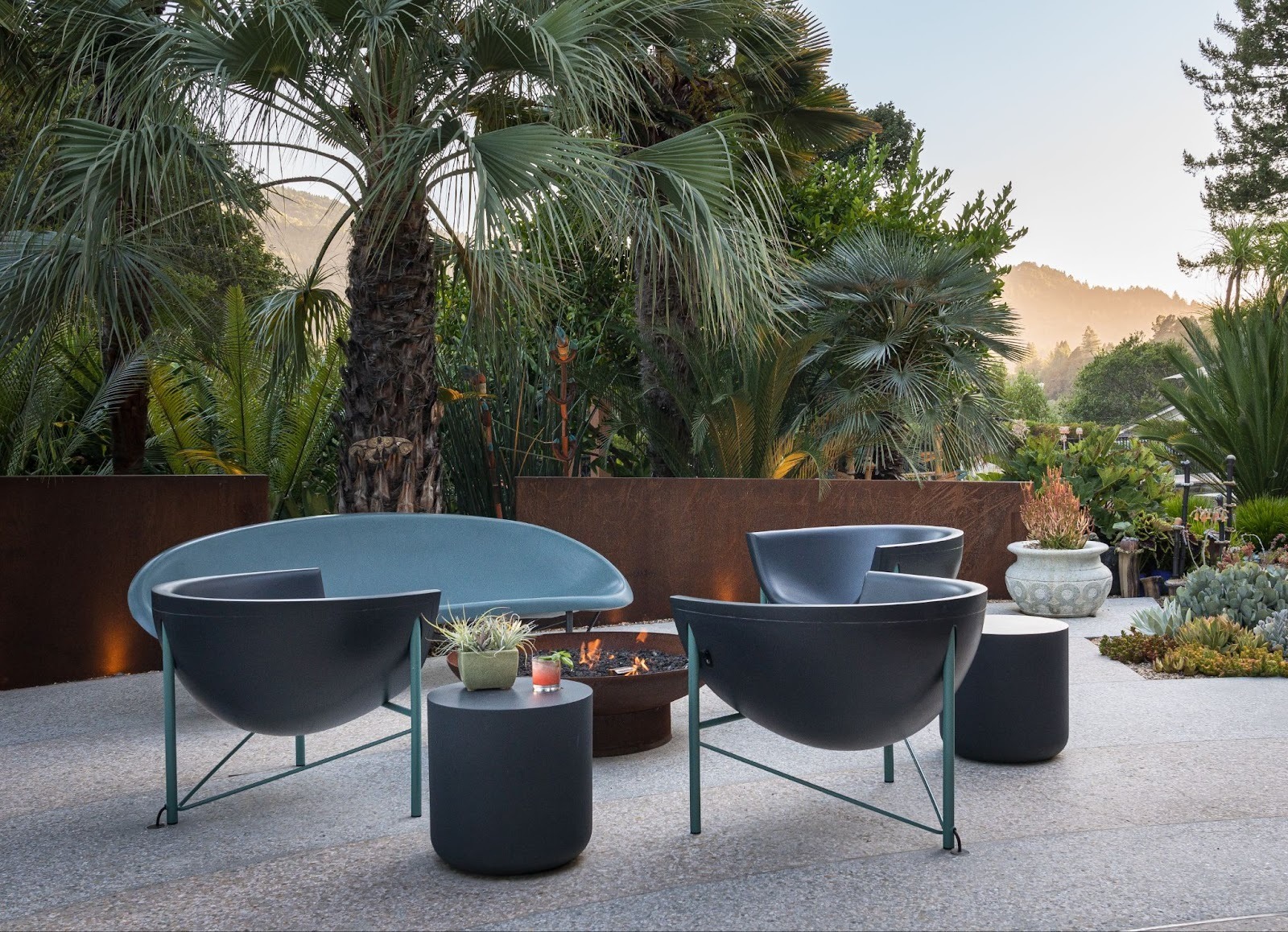
You’ve found the perfect heated lounge, imagined it on your patio, and are looking forward to evenings spent outdoors basking in the gentle warmth. Then comes the practical question: “What do I do with the cord?”
It’s a great question, and one we get all the time. The beauty of our furniture is in its seamless design, and that extends to how it fits into your space. A visible cord can feel like a distraction from an otherwise perfect oasis. The good news is, there’s an elegant solution for every setting, from simple DIY tricks to fully integrated professional installations.
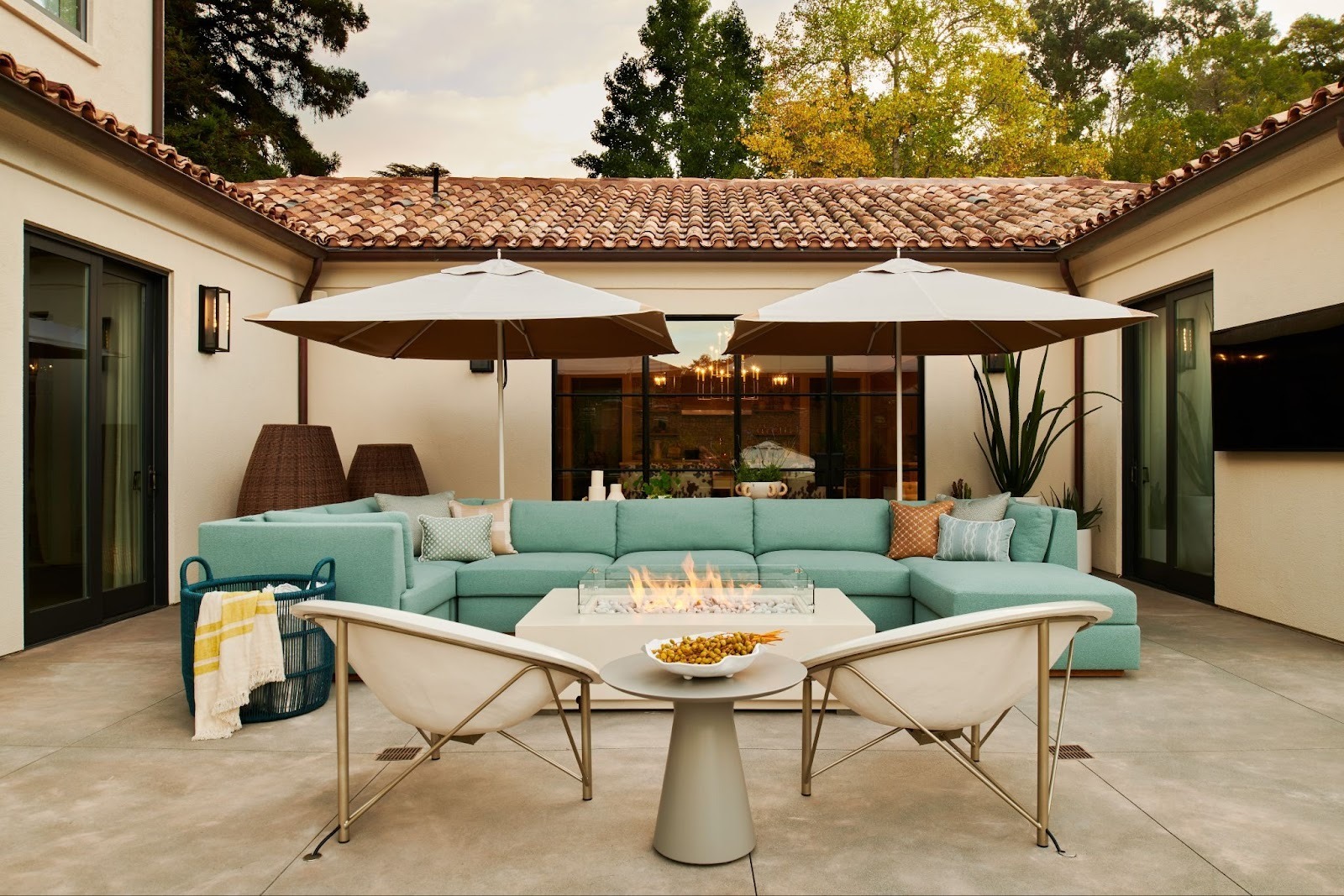
A project by landscape designer Julie Rootes, featuring our Helios Chairs with in-slab conduit cord management.
Outdoor Cords & Safety
Your peace of mind is paramount. Every piece of our furniture is designed with safety as a core principle, so you can relax without a second thought.
About G&J Cords: Every piece of Galanter & Jones heated furniture comes with a standard 12-foot, 3-prong cord. On all of our lounges and Evia chairs, the cord exits from the rear left leg. On our Helios, Kosmos, and Apollo chairs, it exits from the single rear leg. Need something different? Custom cord lengths and exit placements are available by special request.
UL Listed for Safety: Every piece of Galanter & Jones furniture is UL 962 certificated. This means it has been rigorously tested and certified by an independent third party to meet strict safety standards for both household and commercial use.
Built for the Outdoors: Our furniture is designed to live outside year-round. The heating elements and all electrical components are completely sealed, so rain and snow are no problem.
Use the Right Extension Cord: If you need a bit more length, be sure to use a heavy-duty extension cord that is specifically rated for outdoor use and is also UL listed.
GFCI Outlets are Key: When outdoors, your furniture should always be plugged into a GFCI (Ground-Fault Circuit Interrupter) outlet. These are standard for all modern outdoor electrical outlets and are designed to automatically shut off power if they detect any moisture or current imbalance, providing an essential layer of protection.
Now, let’s get those cords out of sight.
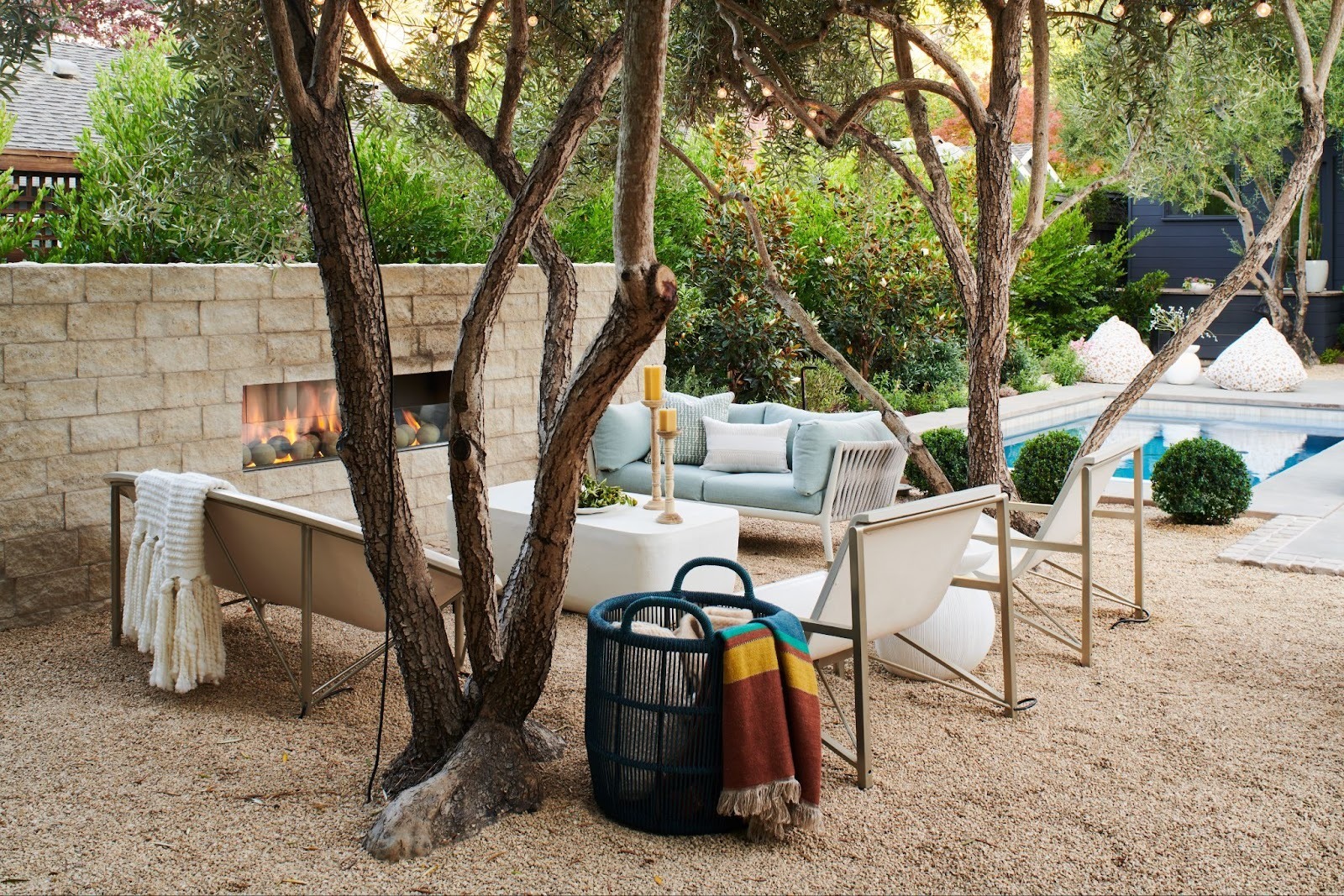
In this design, Julie Rootes buried the cords from the Evia Chairs and Helios Metreo under gravel.
Easy & Creative Cord Management Solutions
For most spaces, hiding a cord is a simple project that requires little more than a bit of thoughtful placement.
1. Slip Through the Slats of A Deck
The easiest solution is often right under your feet. If your furniture will live on a deck, you can simply slip the cord between the slats. This can often be done as is, or might require cutting a small hole in the slats to allow the cord to pass through. Depending on where your power source is located, you can slip the cord back up to plug into the outlet.
2. Hide Under an Outdoor Rug
For covered patios or areas where you plan to have an outdoor rug, you can run the cord underneath so it is out of sight and doesn’t pose a trip hazard.
3. Use Cord Covers
For high-traffic areas, consider a heavy-duty outdoor cord cover. They protect the cord from trips and can be painted to blend seamlessly with your patio or deck surface.
4. Conceal with Nature
Tuck the cord behind a row of planters, a large potted tree, or weave it through a trellis. The cord will disappear behind the foliage.
5. Coil & Secure
If your furniture is placed near an outlet, the simplest solution is often the best. Neatly coil the excess cord and secure it with a zip tie or velcro strap, tucking it behind the leg of the piece.
6. Bury Under Gravel
If your furniture is on a gravel or mulch bed, you can bury the cord a few inches below the surface.
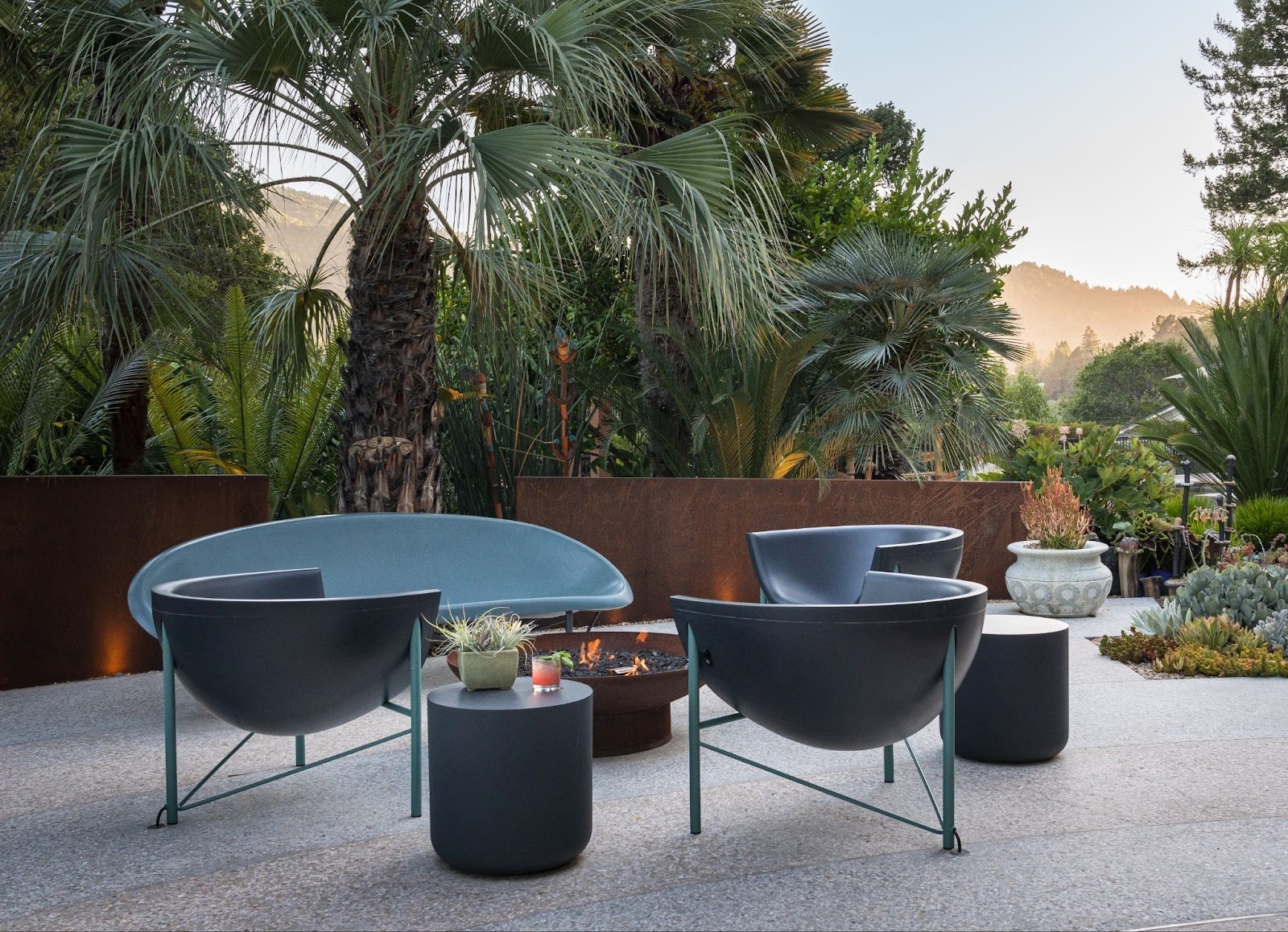
In this stunning project by Green 17 Design, the firm hardwired the cords of the Helios Lounge and three Kosmos Chairs for a seamless, integrated look.
Seamless & Professional Cord Installations
For the most seamless look, especially in new construction or major renovations, professional installation or wiring is your best option. A professional can integrate the power source into your landscape design, making cords virtually disappear.
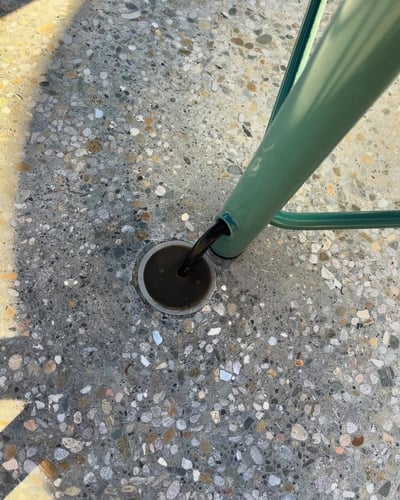
7. In-Slab Conduit
This is the gold standard for a clean finish on a concrete or stone patio. Before the surface is poured, an electrician installs a waterproof tube (a conduit) that runs from your power source to the furniture's location. The cord is then fed through this tube, making it completely invisible and protected.
8. Direct-Burial Cable
For running power across a lawn or through a garden bed, an electrician can install a direct-burial rated cable. This special cable is designed to be safely buried in a shallow trench, delivering power wherever you need it without a visible cord.
9. Hardwiring
For the ultimate seamless look, an electrician can hardwire the furniture directly to your home's power, eliminating the need for a plug and outlet altogether. This is a fantastic option for permanent commercial and residential installations.
Whether you choose a simple, creative concealment or a fully integrated professional installation, there’s a solution to ensure your space remains a beautiful, uncluttered sanctuary. All that’s left to do is sit down, turn the dial, and enjoy the warmth.

-1.png?width=352&name=Blog%20Banner_Bringing%20the%20Heat%20(1)-1.png)